
There comes a point when a wrinkle isn’t just a line that appears when you smile or frown. It may remain visible when your face is completely relaxed, particularly around the lower cheeks, jawline, and mouth. Botox and dermal fillers can be excellent treatments, but they’re designed to solve different problems. They don’t physically remove small portions of excess skin.
Ellacor introduces another option. Using micro-coring technology, it removes microscopic cores of skin to improve moderate to severe wrinkles in the mid and lower face without surgical excision. That makes it particularly interesting for patients who want meaningful skin remodeling but aren’t pursuing facelift surgery.
Continue reading to see what Ellacor can address differently from Botox and fillers and where each treatment still has an important role.
What Ellacor Can Do Differently
The question isn’t whether Ellacor is “better” than Botox or fillers. It’s whether its mechanism better matches the type of aging you’re trying to address.
1. It Removes Microscopic Amounts of Skin
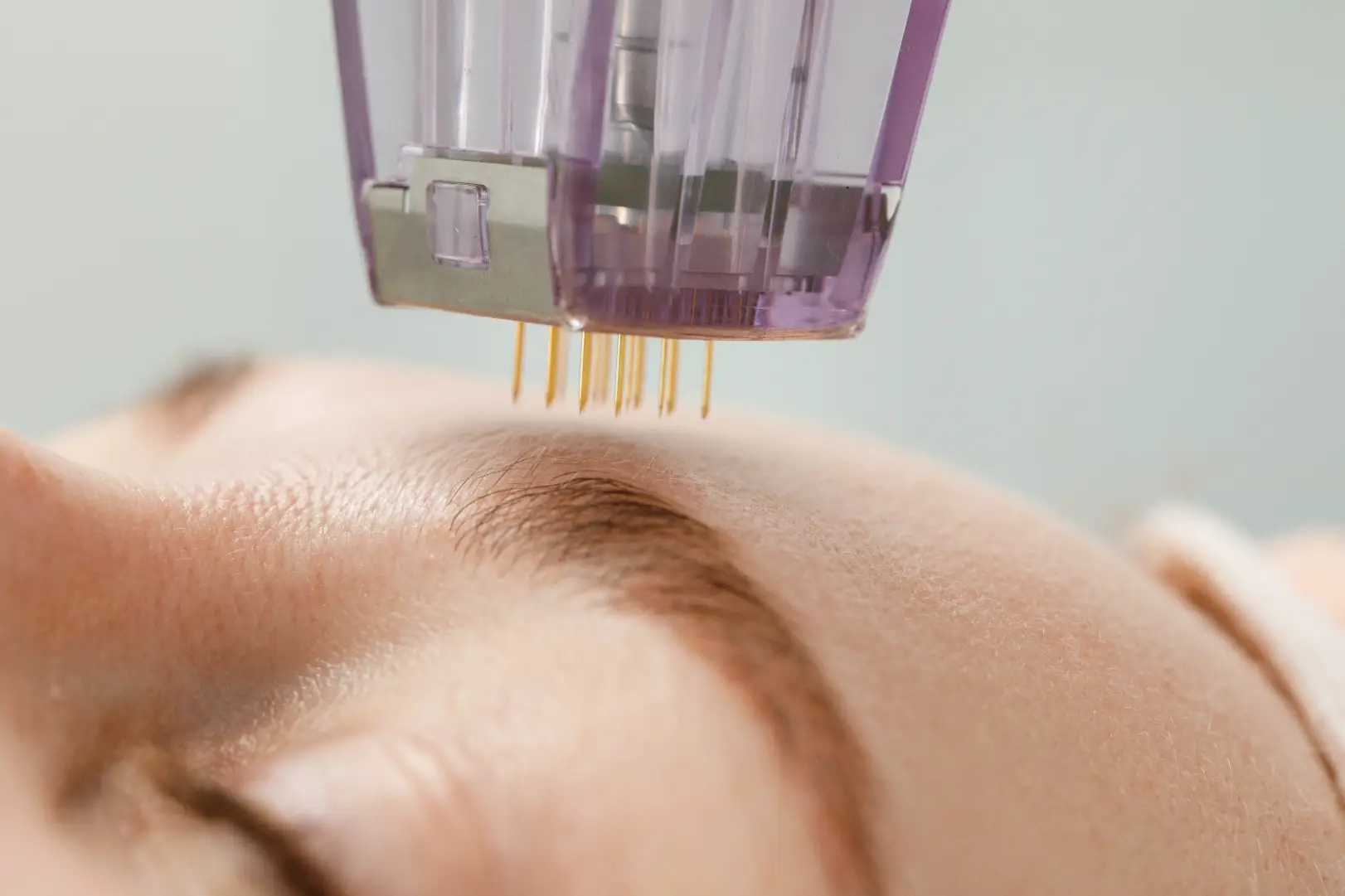
This is the fundamental difference between Ellacor micro-coring and injectable treatments. Ellacor uses hollow needles to remove tiny cores of skin. These microcores are small enough for the surrounding tissue to close as the area heals, creating a remodeling response without making the surgical incisions associated with a facelift.
Botox doesn’t remove tissue. It temporarily reduces the activity of targeted muscles. Dermal fillers don’t remove skin either. They add volume beneath or within tissues to restore fullness, soften certain folds, or refine facial contours. Ellacor takes a different path by physically removing microscopic portions of skin.
For patients whose wrinkles are related partly to skin laxity and structural aging rather than muscle movement or isolated volume loss, that distinction can make Ellacor worth considering.
2. It Addresses Skin Laxity Without Adding Volume
Volume loss is a major part of facial aging, but adding volume isn’t always the answer. Some patients already have sufficient facial fullness. What bothers them is that their skin has become looser or more folded with age. Adding filler to compensate for every wrinkle can eventually work against the goal of looking natural.
This is where conversations about too much filler in the face often begin. Filler itself isn’t the problem. When appropriately selected and conservatively placed, it can restore facial proportions beautifully. Problems can arise when volume is repeatedly added to an area where lax skin, rather than missing volume, is the main issue.
Ellacor doesn’t need to inflate the tissue to create change. By removing microscopic skin cores, the treatment addresses laxity through tissue removal and subsequent healing. That makes it a fundamentally different option for someone who wants improvement without making the face look fuller.
3. It Can Target Wrinkles That Exist at Rest
Botox works especially well for dynamic wrinkles caused by repeated muscle contraction. Think of frown lines, forehead lines, and crow’s feet. By temporarily reducing targeted muscle activity, neuromodulators can soften those expression-related lines.
But deeper wrinkles can become visible even when the face isn’t moving. Once a line has become etched into the skin, muscle relaxation alone may not completely address it. Structural changes in the skin, collagen decline, laxity, and volume changes can all contribute. Ellacor is designed for moderate to severe wrinkles in the mid and lower face.
Instead of reducing the movement that contributes to a wrinkle, microcoring works directly on the skin itself. That’s an important distinction for anyone searching for the best treatment for deep wrinkles. There isn’t one universal winner. The right treatment depends on what’s creating the wrinkle in the first place.
4. It Offers Another Approach Around the Mouth
The mouth is one of the most complicated areas of facial aging. Repeated movement, collagen loss, sun exposure, volume changes, and skin laxity can all contribute to deep wrinkles around the mouth areas. That’s why treating them with only one modality doesn’t always produce the desired improvement.
Botox can be useful for selected movement-related concerns around the mouth, but the area requires conservative treatment because those muscles are essential for speaking, drinking, eating, and expression. Fillers can restore lost volume or soften certain lines, but adding volume isn’t appropriate for every wrinkle.
Ellacor provides another potential wrinkle treatment strategy around the mouth by addressing the skin itself in appropriate treatment zones. Its micro-coring mechanism may be useful when moderate to severe wrinkling and laxity are meaningful parts of the problem. The exact location matters, though.
Ellacor isn’t simply applied to every wrinkle surrounding the lips. Treatment has to follow the device’s appropriate indications and a patient’s anatomy.
5. It Creates Remodeling Without Thermal Energy
Many nonsurgical skin treatments use heat. Radiofrequency and certain laser treatments intentionally deliver controlled thermal energy to stimulate tissue remodeling. Those technologies can be valuable, but heat isn’t the only way to create a regenerative response.
Ellacor works mechanically. Its hollow needles remove microscopic columns of tissue without relying on thermal energy as the primary mechanism. The skin then undergoes a healing and remodeling process. That makes Ellacor microcoring different from laser resurfacing, RF microneedling, ultrasound-based skin tightening, Botox, and fillers.
The distinction can matter when building a personalized treatment plan. A patient may already have addressed pigmentation or texture with lasers but still be bothered by laxity. Another may not want additional facial volume.
Someone else may want an option that works differently from energy-based procedures. Ellacor expands the toolkit rather than replacing everything already in it.
6. It Can Reduce Skin Without Facelift Incisions
A facelift remains the more comprehensive option for substantial facial laxity because surgery can reposition deeper tissues and remove larger amounts of excess skin. Ellacor doesn’t do that.
What it does offer is a way to remove small amounts of skin on a microscopic scale without traditional surgical excision. That’s why Ellacor is sometimes discussed as an alternative to facelift surgery for appropriately selected patients. That phrase needs context, however.
Ellacor isn’t a nonsurgical version of the exact same operation. It doesn’t lift and reposition deeper facial structures the way surgery can. It also can’t match the degree of correction possible with a facelift when laxity is advanced.
For someone with moderate wrinkles and skin laxity who isn’t looking for surgery, however, the different mechanism may fill an important gap between injectables and more invasive procedures.
7. It Doesn’t Depend on Creating Facial Fullness
The goal of youthful facial rejuvenation isn’t always “more volume.” Sometimes it’s better skin architecture. Dermal filler can be extremely useful when the face has genuinely lost volume. Cheeks may flatten, temples can hollow, and structural support can diminish with age.
But not every crease needs filler underneath it. If skin redundancy is the primary issue, continuously adding volume can change facial proportions without fully solving the underlying laxity. Ellacor lets treatment move in another direction.
Instead of asking, “Where can we add more?” a provider can ask whether controlled micro-removal of skin could better address the concern. That’s a very different philosophy.
It also explains why Ellacor and filler don’t necessarily compete. One can address lax or wrinkled skin while the other can address genuine volume loss when both concerns are present.
8. It Can Create Progressive Change
Ellacor results aren’t meant to appear fully formed the moment treatment ends. The skin needs time to heal and remodel after microcores are removed. Improvement can continue developing over the following weeks and months.
The treatment information provided for Ellacor highlights results evaluated months after treatment, including improvement after a series of procedures. This gradual evolution matters when comparing it with injectables.
Botox typically begins producing visible effects within days, with results developing further afterward. Fillers can create immediate structural changes, although swelling can temporarily affect the early appearance. Ellacor asks for more patience.
That can be a positive for patients who prefer gradual changes, but it also means you shouldn’t schedule treatment expecting your final result the following weekend. Healing is part of the process.
9. It Can Be Repeated When Appropriate
One treatment isn’t necessarily the complete Ellacor journey. Depending on the severity of wrinkling, treatment goals, skin response, and clinical plan, patients may undergo more than one procedure. That makes reassessment valuable.
Instead of aggressively treating everything at once, the skin can be allowed to recover and remodel before deciding whether another session is worthwhile. This approach also helps maintain realistic expectations about how to get rid of deep wrinkles.
Aesthetic medicine rarely works like an eraser. Ellacor is intended to improve the appearance of moderate to severe wrinkles, not promise perfectly smooth skin. Aging also continues after treatment, and factors such as sun exposure, genetics, smoking history, and skin quality influence how the face changes over time. Improvement is a more useful goal than perfection.

Give Deeper Wrinkles a Different Option
When wrinkles have become deeper and skin laxity is part of the picture, simply relaxing muscles or adding more volume may not address the whole concern. Ellacor offers a distinctly different approach by using micro-coring technology to remove microscopic portions of skin and encourage remodeling without traditional facelift incisions.
At The Youth Fountain in Freehold Township, NJ, patients can explore whether Ellacor fits their degree of wrinkling, skin characteristics, and rejuvenation goals. A personalized evaluation can also clarify when Botox, fillers, another treatment, or a combination may make more sense, helping facial rejuvenation stay balanced rather than becoming a one-treatment-fits-all decision.
Contact us today to schedule your appointment!


